
Key Takeaways
- Use a site survey to standardize scope, expose access constraints, and prevent misleadingly low bids.
- Verify California licensing, insurance, bonding, and prevailing-wage requirements before selecting a contractor.
- Public projects follow strict procurement rules; private owners have greater flexibility to negotiate terms.
- Price real site conditions, document assumptions, and separate owner options to control change-order risk.
Finding structured cabling bids for Glendale CA projects
For structured cabling bids for Glendale CA projects, compare local scope, scheduling, and documentation against Los Angeles market conditions. Well-defined cabling projects produce cleaner pricing and fewer surprises on active projects in CA.

Site Survey Checklist
- Walk the building with each contractor before pricing begins.
- Record pathways, ceiling types, telecom room capacity, and occupied work areas.
- Confirm parking, loading access, permits, and landlord requirements.
- Document cable routes, firestopping, rack elevations, and test requirements.
- Share identical field notes with bidders to expose scope gaps.
Our Services






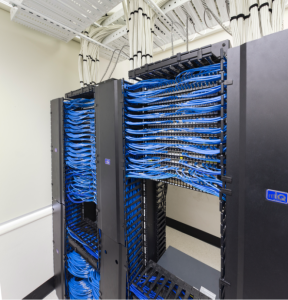


Commercial Cabling Site Survey Checklist
| Survey item | What to document | Why it affects the bid |
|---|---|---|
| Pathway access | Available routes for cable installation | Defines labor, routing, and access needs |
| Ceiling type | Ceiling construction and access conditions | Changes installation methods and labor time |
| Telecom room capacity | Available room space and capacity | Determines space for cabling and equipment |
| Occupied work areas | Areas in use during the project | May affect work scheduling and site access |
| After-hours restrictions | Permitted work hours and restrictions | May change labor scheduling and costs |
| Parking and loading access | Parking options and material delivery access | Sets site logistics for crews and materials |
| City permit responsibility | Party responsible for permits | Clarifies permit-related scope and costs |
| Landlord rules | Building or landlord requirements | May limit installation methods or access |
| Cable routes | Planned cable paths through the building | Defines route length and installation scope |
| Firestopping needs | Locations requiring firestopping | Identifies required materials and labor |
| Rack elevations | Rack layout and equipment placement | Defines rack-related installation work |
| Test requirements | Required cable testing | Sets testing labor and deliverables |
| Existing infrastructure | Assumptions about current cabling and infrastructure | Helps reveal scope gaps between bids |
Glendale site survey checklist
- Walk the building with each contractor before pricing.
- Record pathways, ceiling types, telecom-room capacity, and occupied areas.
- Confirm parking, loading access, permits, and landlord rules.
- Document cable routes, firestopping, rack elevations, and testing requirements.
- Share identical field notes to expose scope gaps and low bids.
Service Area
California public bids and private-project rules
California construction work divides sharply between public procurement and private business deals. State agencies, cities, school districts, and special districts must follow statutes, local rules, bid notices, award procedures, contractor licensing standards, and, on many projects, prevailing-wage requirements. A low number alone may not win: responsiveness, bidder responsibility, subcontractor listings, bonds, and protest deadlines can shape the award. Private owners retain far more latitude to negotiate scope, pricing, qualifications, and delivery method, subject to California’s legal limits on licensing, mechanics liens, payment, labor, and consumer protections. Before pursuing any opportunity, identify the owner, funding source, delivery method, and contract form; those facts determine the rules that control.

Licensing, insurance and bid-readiness checks
Before inviting a cabling contractor to price a project, verify the basics that protect the site, schedule and budget. In California, scope matters: low-voltage communications work may fall under a C-7 license, while broader electrical work can call for a C-10 contractor. Confirm the license is active through the California Contractors State License Board, matches the bidding entity and covers the proposed work. Request current general liability, workers’ compensation and commercial auto insurance certificates, then ask whether your property manager or owner must be named as an additional insured. For a CA bid, compare exclusions, bonding requirements, prevailing-wage obligations and the contractor’s ability to provide submittals, staffing plans, safety documentation and a clean, itemized proposal before award.