
Key Takeaways
- Start with a site walk covering pathways, rack layout, PoE needs, firestopping, testing, and future expansion.
- Copper supports everyday Ethernet and PoE devices; fiber suits long distances, high bandwidth, and building backbones.
- Reliable Wi-Fi requires properly placed access points with dependable wired backhaul connections.
- Require labeled runs, documented spare capacity, and test results for every installed cable.
- Avoid quotes that omit testing, certification, documentation, or support for cameras, access control, AV, and future growth.
Network Cabling Company Glendale CA: Services for Commercial Sites
For a Glendale office, retail space, medical suite, or multi-tenant property, the cable plant is the physical system behind every call, cloud application, access point, camera, and point-of-sale device. Choosing a network cabling company Glendale CA means looking beyond a quick pull of wire. The right team maps pathways, labels every run, works cleanly around occupied spaces, and leaves records that make future moves easier.
Thoughtful cabling solutions give a business room to grow without reopening walls or tracing unidentified lines above a ceiling. A qualified contractor can coordinate the project with IT, low-voltage trades, property management, and Ethernet Local partners, then provide test results and responsive support. That discipline turns an installation into infrastructure a commercial site can depend on from day one.
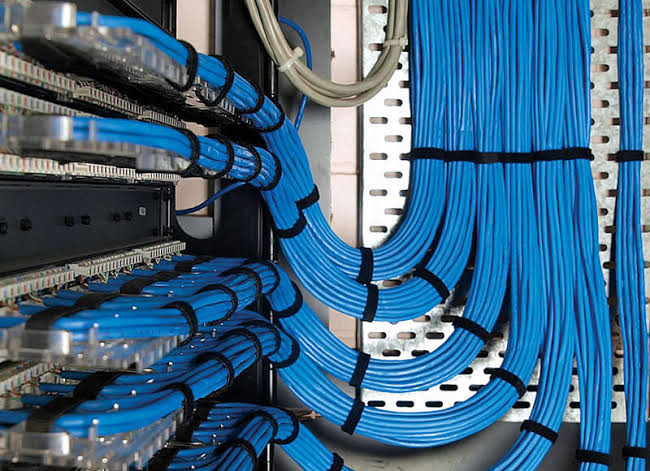
Commercial Network Cabling Planning Checklist
| Planning area | What to confirm before installation | Why it matters |
|---|---|---|
| Outlet placement | Outlet locations for office, retail, medical, and multi-tenant spaces | Supports the devices used at each location. |
| Rack layout | Rack location and patch-panel termination plan | Supports organized connections and service work. |
| Pathways and capacity | Cable pathways, available capacity, expansion ports, and documented spare capacity | Leaves room for future moves and growth without reopening walls. |
| PoE demand | Power needs for access points, cameras, and other powered devices | Matches the cable plant to connected equipment needs. |
| Cable installation details | Cable category, bend radius, separation from power, and firestopping | Shapes long-term reliability and supports building requirements. |
| Testing | Test results for completed cable runs | Provides records for the installed system. |
| Labeling and documentation | Labels for every run and records of the installation | Makes future moves easier and reduces time spent tracing unidentified lines. |
| Site coordination | Building operating hours and coordination with IT, low-voltage trades, property management, and Ethernet Local partners | Helps work proceed cleanly around occupied commercial spaces. |
Our Services

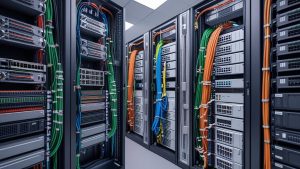
Copper, Fiber Optic and Low Voltage Cabling Choices
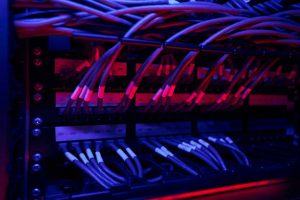
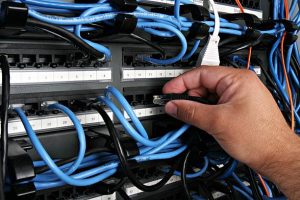
A well-planned cabling system gives a property room to grow without opening walls again a few years later. Copper remains the everyday workhorse for ethernet connections: reliable for computers, access points, cameras, phones and many smart-building devices. Category-rated copper cable can carry data and, through Power over Ethernet, supply power to compatible equipment from a central location. That makes it a practical choice for most low voltage cabling runs in homes, offices, retail spaces and light commercial projects.
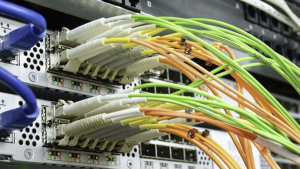
Fiber optic cable earns its place where distance, bandwidth or electrical isolation matter. It carries information as light, making it well suited to links between buildings, equipment rooms, floors and other long runs where copper reaches its limits. Fiber is a strong investment for high-capacity internet service, backbone connections and sites expecting more connected devices over time.
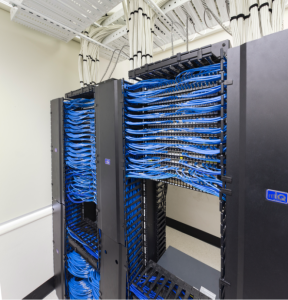
Wireless service still depends on a wired foundation. Each access point needs a dependable cable run, and its placement affects coverage far more than the internet plan alone. A thoughtful design separates power and data where required, labels every drop and leaves pathways for future additions. The right choice is rarely one cable everywhere; it is a standard of planning that matches the building, the equipment and the years ahead.
Where Copper and Fiber Fit in a Low-Voltage Cabling Plan
| Planning factor | Copper cabling | Fiber optic cabling |
|---|---|---|
| Typical connected equipment | Computers, access points, cameras, phones, and many smart-building devices | Links between buildings, equipment rooms, floors, and other long runs |
| Distance and bandwidth needs | Practical for most low-voltage runs in homes, offices, retail spaces, and light commercial projects | Suited to runs where distance or bandwidth needs exceed copper’s reach |
| Power delivery | Can carry data and supply power to compatible equipment through Power over Ethernet | Carries information as light |
| Electrical isolation | Not identified for electrical-isolation needs | Suited to links where electrical isolation matters |
| Common role in the cabling system | Everyday connections and wired runs to wireless access points | High-capacity internet service and backbone connections |
Service Area
Glendale CA Cabling Projects and Warning Signs
In Glendale CA, a cabling project is often judged long after the installers leave. A clean ceiling, neat wall plates, and labeled panels matter, yet the real measure is whether the network supports daily work without unexplained slowdowns, dropped calls, or difficult service visits. For offices, retail sites, medical practices, and mixed-use properties in Glendale, the right cable and wiring plan starts with how the space operates now and what may change over the next several years.
Warning signs tend to appear early: Wi-Fi access points placed without a wired backhaul, a cable bundle resting on ceiling tiles, reused wiring of uncertain category, or quotations that omit testing and documentation. Another concern is a design built only for desks, with no allowance for cameras, access control, AV, point-of-sale devices, or future bandwidth demands. A well-scoped Glendale project treats these systems as part of one dependable infrastructure, giving owners a clearer view of cost, performance, and maintenance before walls are closed.

Cabling planning checklist
- Use category-rated copper for computers, cameras, phones, access points, and smart-building devices.
- Choose Power over Ethernet for compatible equipment needing centralized data and power.
- Run fiber optic cable between buildings, floors, equipment rooms, or other long-distance locations.
- Plan fiber backbones for high-bandwidth internet service and growth in connected devices.
- Place wireless access points around coverage needs; each unit requires a dependable wired connection.
- Keep power and data cabling separated where codes or equipment requirements call for it.
- Label every cable drop and leave accessible pathways for future runs and equipment changes.
Practical Cabling Planning Checklist
- Use category-rated copper for everyday Ethernet drops serving computers, phones, cameras, access points, and smart-building equipment.
- Plan Power over Ethernet runs for compatible devices, reducing the need for separate local power outlets.
- Choose fiber for building-to-building links, long runs, equipment-room backbones, and high-bandwidth service connections.
- Place wireless access points based on coverage needs, then provide each location with a dependable wired cable run.
- Keep power and data cabling separated where codes, equipment requirements, or interference concerns call for it.
- Label every cable drop, patch panel port, and pathway clearly for faster maintenance and future changes.
- Leave spare conduit, pathways, and capacity for new devices without reopening finished walls.
Choosing Cabling Services in Glendale
The right cabling partner does more than pull wire through ceilings and walls. For a Glendale office, retail site, medical practice, or mixed-use property, the work should begin with a close read of the building: equipment locations, pathways, power separation, future workstation needs, Wi-Fi coverage, and the demands placed on voice, data, cameras, and access control. Reliable signal solutions start with that planning, not with a spool of cable.
Structured cabling is particularly valuable where technology changes often. It creates an orderly backbone for moves, additions, and new devices without turning every upgrade into a disruptive construction project. Ask for a site walk, a written scope, and test results for each installed run. Price matters, yet the lowest quote can leave out documentation, certification, or the capacity that a growing Glendale operation will need next year.