
Key Takeaways
- Define each “drop” clearly: cable run, outlet, patch-panel termination, labeling, and certification can vary by quote.
- Small projects often cost more per drop because mobilization, planning, testing, and closeout work remain fixed.
- Ceiling access, pathway difficulty, fire-rated penetrations, long runs, and after-hours work can materially raise installation costs.
- Use Cat6 for typical desks, Cat6A for 10GbE and dense Wi-Fi, and fiber for backbones or longer distances.
- Compare quotes by included labor, materials, permits, testing, documentation, and exclusions, not headline per-drop pricing.
- Reuse existing cable only when condition, labeling, pathway compliance, and certification results support planned network and PoE demands.
Office network cabling cost per drop in Glendale CA: what a price includes
Office network cabling cost per drop in Glendale CA is most useful when the scope behind the number is clear. A single drop may mean one Cat6 cable run, one workstation outlet, a labeled patch-panel termination, and certification testing; another quote may count each faceplate port as a separate drop installed. That difference changes the apparent cabling cost before labor rates or materials enter the picture. For commercial office cabling, a credible per-drop figure should identify cable category, pathway conditions, outlet hardware, ceiling access, cable length assumptions, rack-side work, labeling, and final testing. Data cabling installed through open ceilings is priced differently from network cabling routed above hard-lid ceilings, through fire-rated walls, or across several floors. Structured cabling proposals should state whether permits, after-hours work, furniture moves, patch cords, and network rack cleanup sit inside or outside the quoted price. Ask how many drops share a pathway and where the estimate places the telecommunications room. Longer home runs and difficult access can raise cabling costs even in a modest suite. A well-built quote does more than name a price per drop: it gives a Glendale office manager a defined installation standard, a countable scope, and test results that document each completed connection.
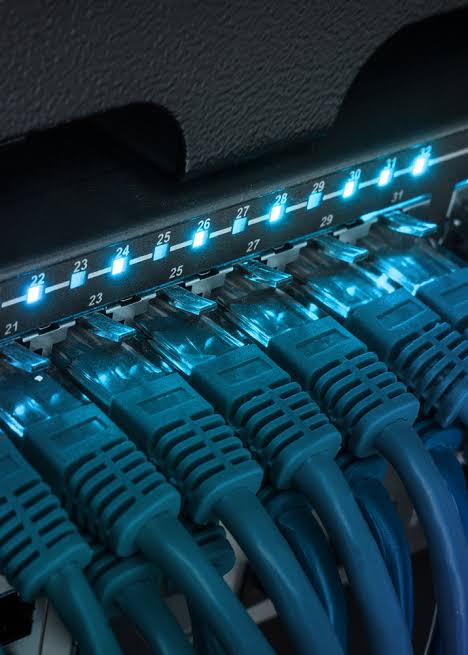
Fixed tasks that affect small-project cable pricing
| Fixed task or constraint | Why it is needed | How it can affect a small job |
|---|---|---|
| Drawing review and scope confirmation | Confirms the required work before cable installation begins. | Preparation time is spread across only one or two outlets. |
| Site access and inductions | Allows the contractor to enter and work on site. | Access administration creates a baseline time cost regardless of drop count. |
| Route planning | Plans safe routes through ceilings, risers or occupied areas. | Planning is still required for a short cable run. |
| Travel, vehicle loading and equipment | Brings tools, testing equipment and materials to the site. | These visit costs are shared across few installed outlets. |
| Site protection | Protects the work area during installation. | It adds baseline work even on a limited scope. |
| Safety controls | May require a spotter for ladder work, area-isolation permission or an after-hours booking. | Extra site time can raise the price allocated to each outlet. |
| Restricted or difficult access | Comms-room restrictions or congested ceiling voids can limit working access. | Work can take longer than the floor plan suggests. |
| Outlet termination and labelling | Each installed outlet must be completed and identified. | Per-outlet work remains necessary even where the project has few drops. |
| Testing and documented results | Verifies the installation and records the outcome. | Testing effort contributes to the cost of each small job. |
| Tidying and handover | Leaves the workspace tidy and hands over the completed installation properly. | Close-out tasks are spread across very few outlets on a one- or two-drop scope. |
How drop count changes the project price
Drop count shapes installation costs, yet it is only one part of the cost of a cabling project. A capable cabling contractor prices labour, site conditions and the services needed to complete reliable installations, not just the number of outlets.
Office cabling selection checklist
- Use Cat6 for standard desk connections and short multigigabit links where material costs matter.
- Choose Cat6A for 10GbE, dense wireless access points, and premises planned for long service life.
- Allow for Cat6A’s larger diameter, tighter route capacity, bend management, and extra installation labour.
- Specify fiber for links between floors, communications cabinets, or buildings with long distances or electrical interference.
- Use fiber between communications rooms, then copper from cabinets to desks and work areas.
- Label cables, patch panels, and outlets clearly; retain spare capacity for moves, additions, and changes.
- Include termination, certification testing, and documented results to find faults before staff rely on each link.
Our Services






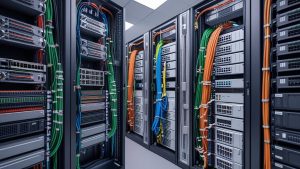
Installation costs: access, pathways, and cable selection
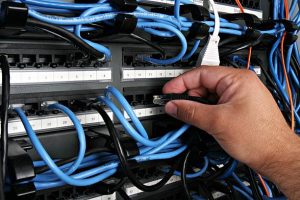
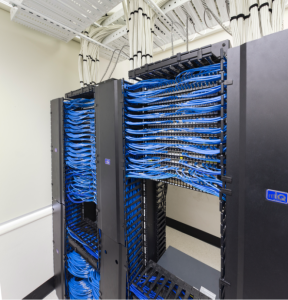
Installation costs reflect more than cable metres. Access above ceilings, existing pathways, working hours, data outlets, system design, applicable standards, and site safety all shape the price of a reliable office network.
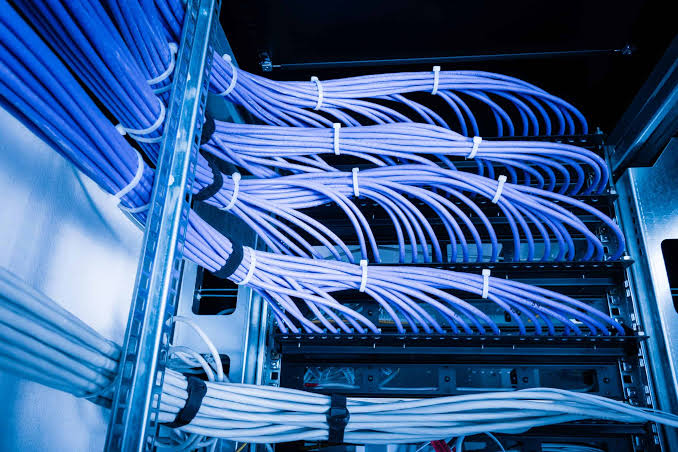
Cable Reuse Checks
- Review documented cable routes, labels, outlet IDs, and patch-panel records before retaining any run.
- Inspect exposed jackets, terminations, connectors, pathways, grounding, and firestopping for damage or missing records.
- Verify copper category, permanent-link length, spare capacity, and compatibility with planned network speeds.
- Request certification reports tied to cable IDs; continuity tests alone do not prove reliable network performance.
- Test planned Power over Ethernet loads, since older runs may pass data traffic yet fail under power demand.
- Replace marginal or undocumented cables before ceilings, walls, or furniture make later access costly.
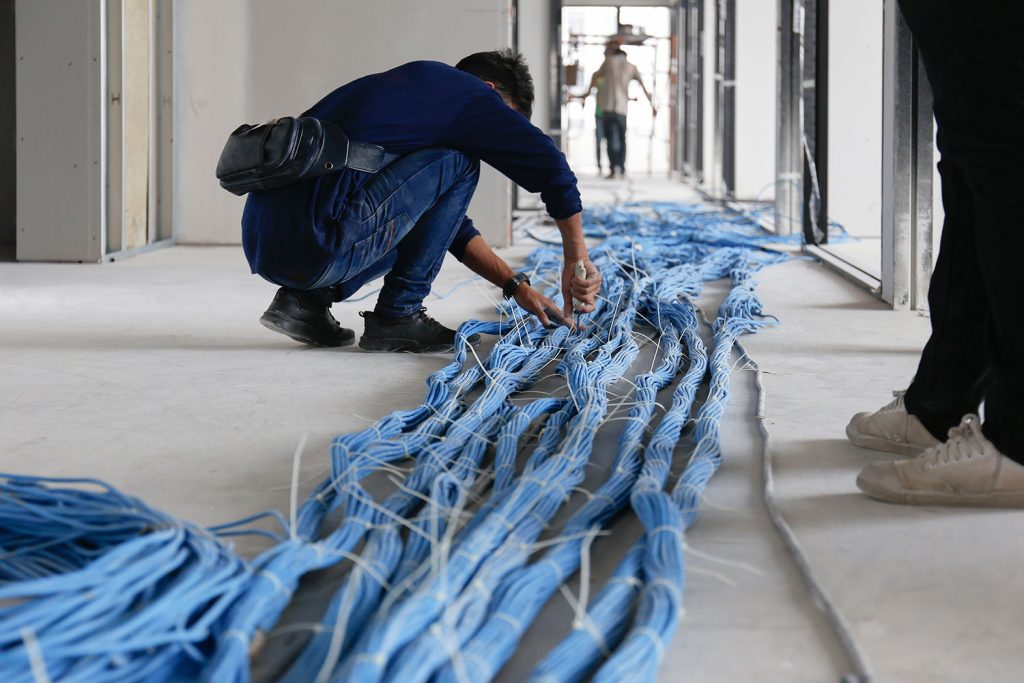
Reading a cabling quote: scope, California compliance, and reuse
A cabling quote should state the scope in plain terms: data cabling routes, fiber work, applicable California standards, testing records, permits, and closeout documents. The price matters, but the quote should show exactly what work is included and what assumptions could change it.
Service Area
Budget scenarios and occupied-office installation planning
A clear cabling budget starts with the work your space needs today and the changes it may face over the next few years. For Glendale businesses, the first count is usually the number of workstation drops, yet the full project cost rests on more than cable runs. Pathways above ceilings, wall conditions, furniture layout, server-room readiness, testing requirements, and after-hours labor all shape the estimate. A small suite with open ceilings may support a straightforward installation; a busy office with finished walls, shared corridors, and limited shutdown windows calls for more careful staging.
Ask for a scope that separates materials, labor, certification, and any work outside standard hours. That makes it easier to compare commercial office cabling services without mistaking a low starting quote for a lower finished price. It can be wise to include a modest number of spare drops in areas likely to add staff, printers, access points, or meeting-room equipment. Adding capacity during planned installations is typically cleaner than reopening ceilings after occupancy.
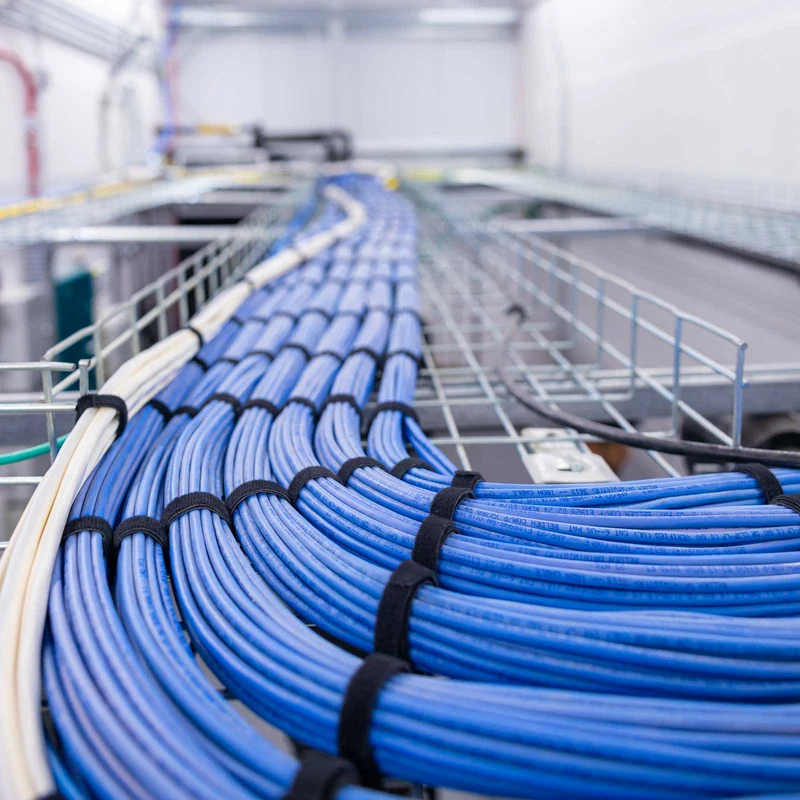
Cable Reuse Assessment Checklist
| Assessment area | What to verify | Why it affects the reuse decision |
|---|---|---|
| Run records | Confirm that the cable run is documented and labels are present. | Clean records help identify the run and link test reports to cable IDs. |
| Physical condition | Inspect exposed cable jackets, terminations, patch panels, and connector condition. | Damage or poor connections can make a retained run unreliable. |
| Pathways and grounding | Review pathways, grounding, fire-rated pathway records, and firestopping documentation. | Missing pathway or firestopping records may not meet space requirements. |
| Copper cable specifications | Confirm the cable category, link length, planned network speed, and power needs for each outlet. | The existing cable must suit the intended data and power use. |
| Certification testing | Request installed-copper certification results and permanent-link reports tied to cable IDs. | A continuity check alone may not reveal marginal performance or load-related failures. |
| Power over Ethernet performance | Check that older runs can handle planned Power over Ethernet loads. | A run may pass basic data traffic yet fail under PoE loads. |
| Capacity and access risk | Confirm spare capacity and identify questionable runs before walls, ceilings, or furniture restrict access. | Replacement becomes more expensive after access is limited. |
Start with a site survey and compare quotes line by line
Before asking for numbers, schedule a site survey with each prospective contractor. A walk-through reveals the details that change the price: ceiling access, pathway congestion, wall construction, distance to the telecom room, after-hours work, and whether existing trays or conduit can be used. Without that visit, a low cabling quote may rest on assumptions that reappear later as change orders. Ask each contractor to price the same written scope and list the proposed drop count, cable category, faceplates, patch panels, labeling, testing, certification, and cleanup. Then compare quotes line by line rather than circling the lowest total. One quote may include a 10-foot average cable run; another may allow for the actual routes through a Glendale office. One may cover testing only, while another includes test results and remediation if a run fails.
For a useful view of office network cabling cost per drop in Glendale CA, separate labor, materials, and project conditions from the quoted per-drop figure. Confirm whether each drop means one cable or a workstation location with multiple cables. Ask how additions, moves, inaccessible ceilings, permits, parking, and weekend scheduling are billed. A detailed quote gives you a defensible budget and makes the final installation far less prone to surprise charges.